Polarised Sunglasses

What Is Polarisation?

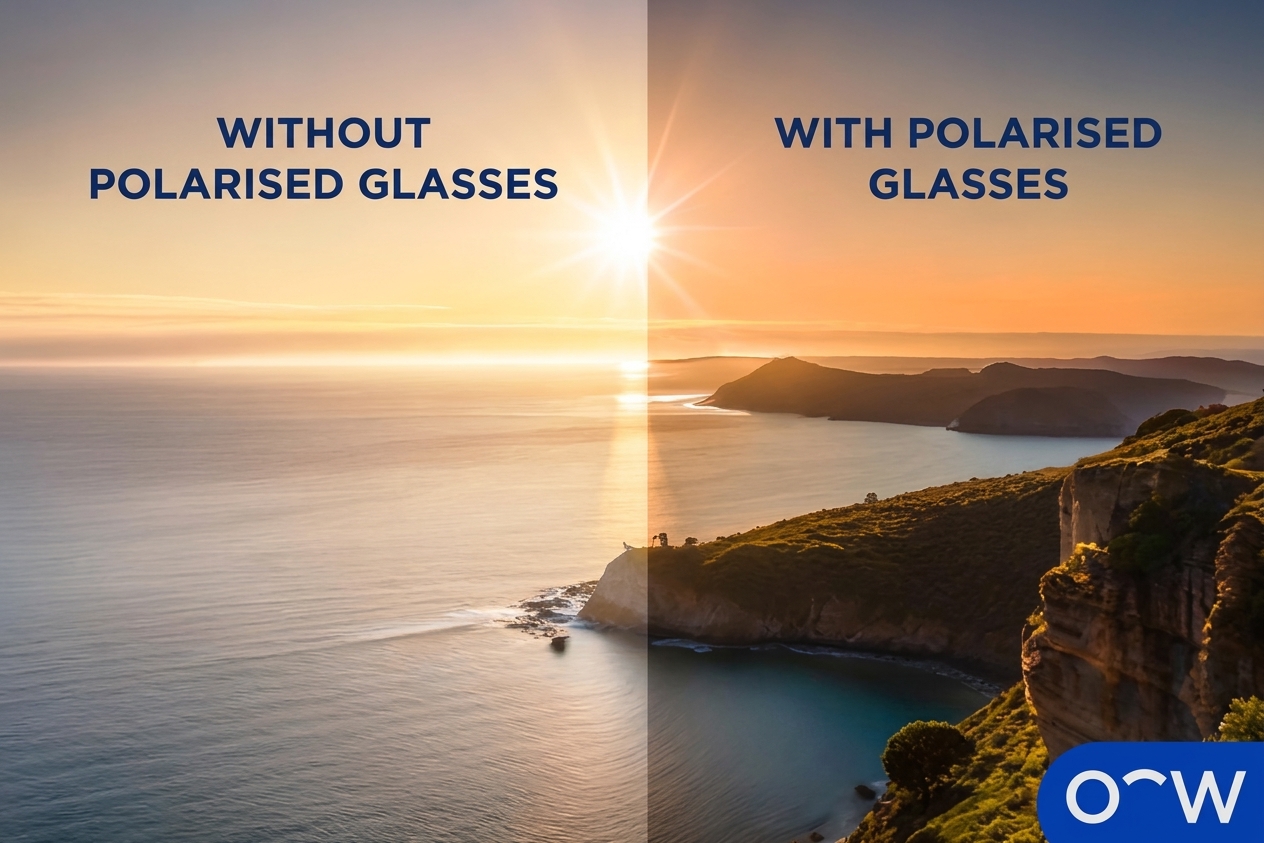
Polarisation is a way of reducing the bright, reflected glare that can make it difficult and uncomfortable to see outdoors.

When sunlight hits a flat or shiny surface — such as water, wet roads, sand, glass or a car bonnet — some of the light is reflected towards our eyes as intense glare.

Polarised lenses contain a special filter that helps block much of this reflected glare while still allowing useful light to pass through.

The result is clearer, more comfortable vision with less distracting glare. Colours and details can appear easier to see, particularly around highly reflective environments such as the beach, swimming pool, snow or water.

For children who spend so much time playing and exploring outdoors, polarisation can provide an additional level of visual comfort and glare reduction.

An easy way to think about it

UV protection protects the eyes from ultraviolet radiation.
Polarisation reduces reflected glare.

They are two different features — and a quality pair of children's sunglasses can provide both.
Understanding Polarised Sunglasses

Polarised Sunglasses

Polarisation is a special filter built into some sunglasses that reduces glare. It does not make sunglasses darker, and it does not improve UV protection—its job is simply to make bright reflected light more comfortable to look at.

The Science

How Do Polarised Sunglasses Work?

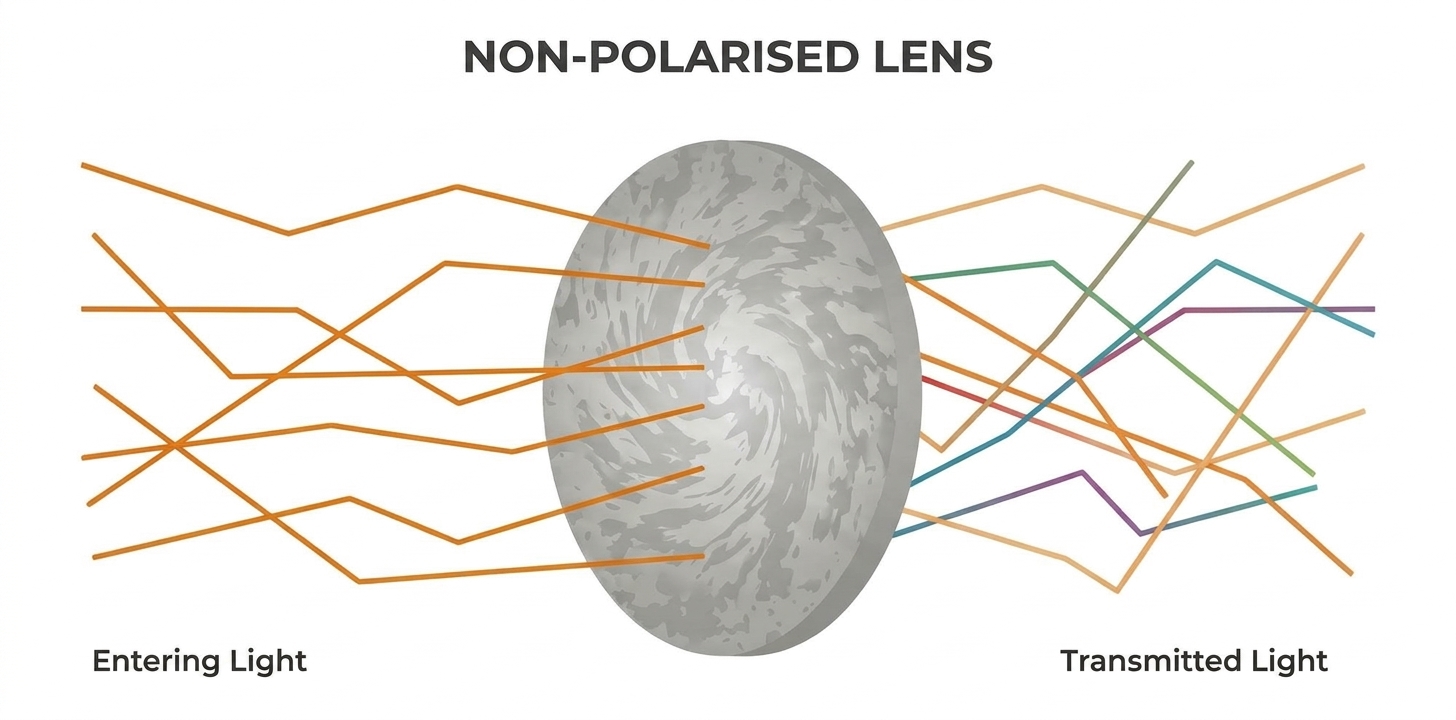
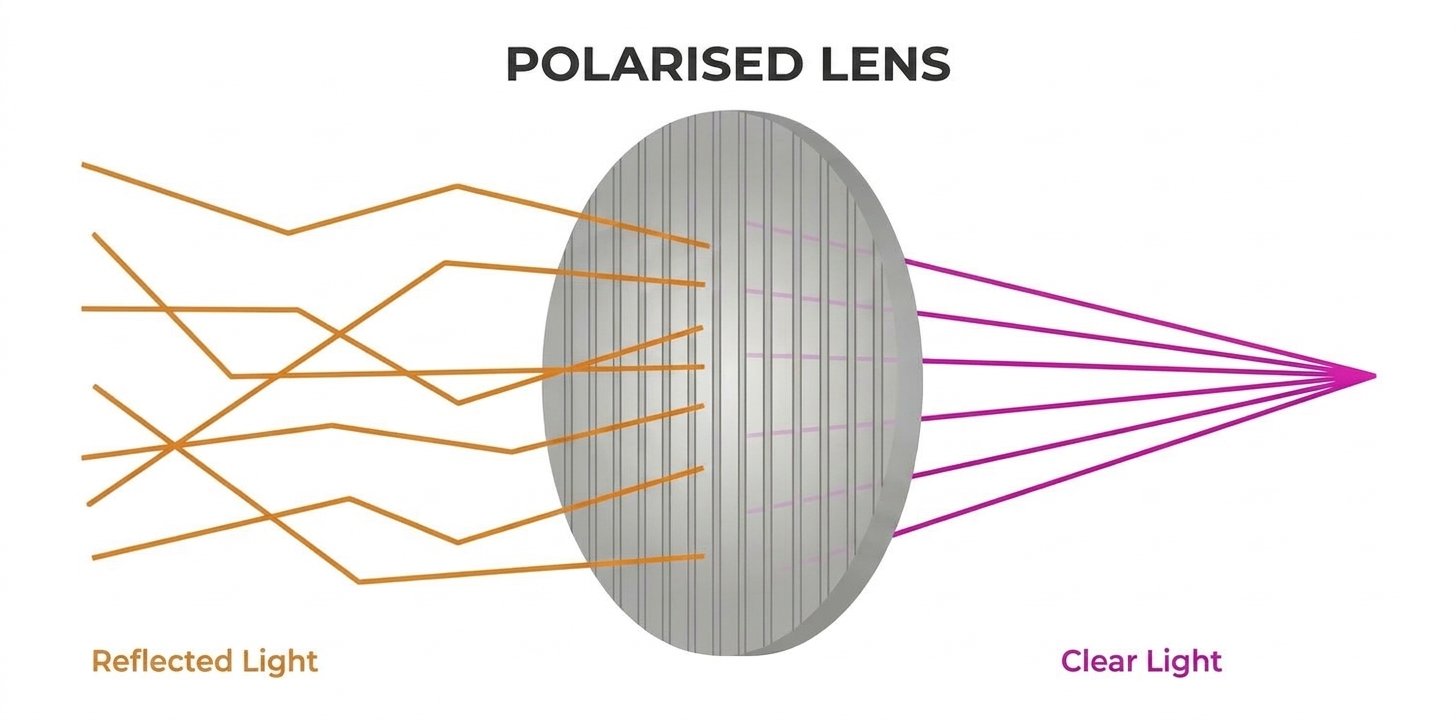
When sunlight hits a flat surface such as water, roads, sand, snow, car bonnets or glass, the reflected light becomes concentrated in one direction. This intense reflected light is called glare, and it can make you squint, reduce what you can see and make your eyes uncomfortable.

Inside the lens is an extremely thin polarising filter—think of it like tiny vertical blinds. It blocks the horizontally reflected light that creates glare while allowing most other light to pass through, resulting in less glare, clearer vision and improved contrast.

How Do Polarised Sunglasses Work?
!

Does Polarisation Block UV? No.

This is one of the biggest myths about sunglasses. UV protection blocks harmful ultraviolet radiation. Polarisation reduces glare. A pair of sunglasses could theoretically be polarized but have poor UV protection— that's why you should always look for UV400 protection, which blocks virtually all UVA and UVB radiation reaching the eye.

Best Suited For

Polarised Sunglasses Are Particularly Useful For

Driving Boating Fishing Beach Activities Walking Near Water Snow Sports Bright Sunny Days
For Families

Should Children Wear Polarised Sunglasses?

For many children, yes. Children spend a great deal of time outdoors and often play near highly reflective surfaces such as beaches, swimming pools, playgrounds, footpaths and roads.

Reducing glare can make outdoor play more comfortable and may reduce squinting and visual fatigue—particularly for children who play sport, enjoy the beach, sail, fish or ski.

Should Children Wear Polarised Sunglasses?
Material Matters

TAC vs Polycarbonate

TAC (Triacetate Cellulose) isn't the polarising filter itself—it's simply one of the materials commonly used to manufacture polarized lenses. Quality depends on the manufacturer, materials, coatings and construction, not the material alone.

TAC Lenses

  • Excellent optical clarity
  • Lightweight
  • Relatively inexpensive
  • Ideal for everyday sunglasses
  • Less impact resistant
  • More likely to crack or chip on impact

Polycarbonate Lenses

  • Exceptional impact resistance
  • Greater durability for active play
  • Improved safety for children
  • Same polarising performance as TAC
Recommended for Kids

For children's sunglasses, where lenses may be dropped, bent or hit during play, polycarbonate lenses are generally preferred because of their exceptional impact resistance. Polycarbonate does not polarise better—it simply provides a stronger, safer lens material.

Common Questions

Frequently Asked Questions

Are polarized sunglasses better?

Not necessarily. They are better for certain situations, but not because they protect the eyes more—they simply make vision more comfortable.

Are polarized sunglasses safer?

They are safe for healthy eyes. The polarising filter does not damage the eye or change how the eye develops—it simply changes which light reaches the eye by reducing glare. There is no evidence that properly manufactured polarized lenses are harmful to children's eyes.

Can polarized sunglasses improve vision?

They don't improve eyesight itself. Instead they can improve comfort, contrast, visibility and colour perception, particularly on bright sunny days. Many people find they squint less and feel less tired after prolonged outdoor activities.

Do polarized sunglasses make colours look different?

Often, yes. Many people notice deeper blues, richer greens and sharper contrast. This happens because glare is removed, allowing colours to appear more natural.

Are there any disadvantages?

Polarised lenses may make some phone screens harder to read, make some car dashboard displays appear darker, and interfere with certain LCD screens. Most people quickly adapt to this.

Does every child need polarized sunglasses?

Not necessarily. The most important features of any children's sunglasses are UV400 protection, good optical quality, impact-resistant lenses, comfortable fit and coverage that keeps sunlight out from around the eyes. Polarisation is an excellent additional feature, but it should not replace these essentials.

Our Philosophy

The Idol Eyes View

At Idol Eyes, we believe the first priority should always be protecting children's eyes from harmful UV radiation. That's why every pair of Idol Eyes sunglasses provides UV400 protection, blocking virtually all UVA and UVB rays.

For families who spend time at the beach, around water, on the road or in other bright outdoor environments, our polarized lens options can also provide greater visual comfort by reducing glare. We see polarisation as an added benefit—not a substitute for high-quality UV protection.

See Our Polarised Range
The Idol Eyes View

Polarised vs Non-polarized Lens

Unpolarized Lens
Polarised Lens

Polycarbonate Polarised Range

Explore our range of polycarbonate polarized sunglasses, built for comfort, durability and everyday outdoor play.

Shop the Range